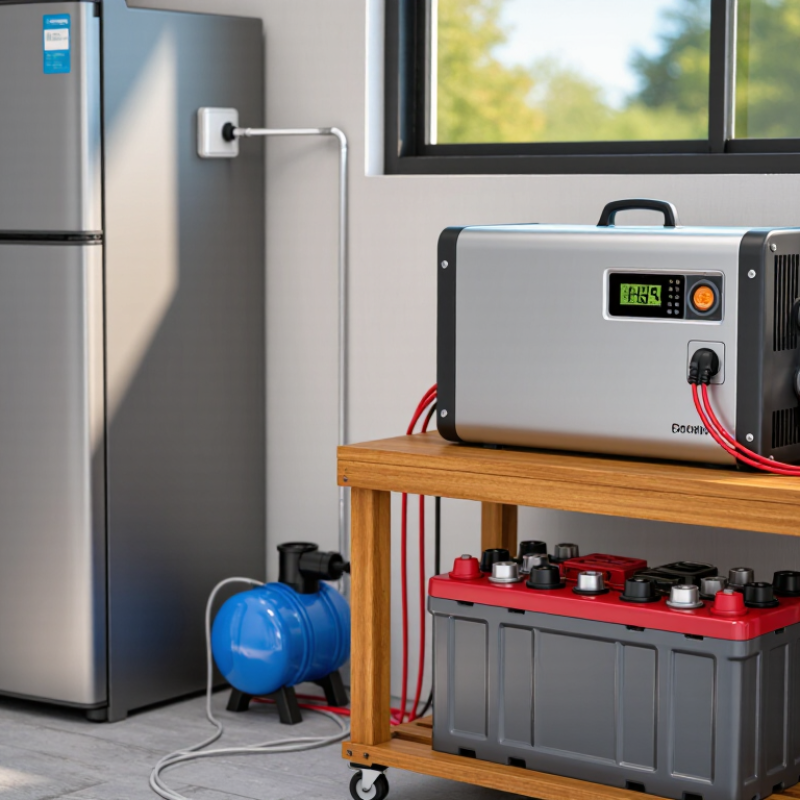
An off-grid inverter can look calm while a hidden overload is building. A refrigerator starts. A pump kicks in. A microwave draws power at the same moment. Then the inverter reaches its limit. This explains what happens when an off grid inverter gets overloaded by appliances: warning lights may flash, output voltage may drop, or the inverter may shut down to protect its circuitry. In severe cases, repeated stress can damage switching components, cables, or battery connections.
Energy-storage engineer and author William H. Kemp describes the practical principle clearly: “Every electrical load must be matched to the inverter’s continuous and surge capacity.” That idea sounds simple, but real homes make it difficult. Appliance labels show running watts, not always startup demand. A 700-watt refrigerator compressor might briefly require two or three times more power. A small water pump can create the same surprise. I have seen systems fail during ordinary mornings, not dramatic emergencies.
This guide explains how to prevent off-grid inverter overload from appliances through realistic load planning. We will examine continuous wattage, startup surge, battery voltage, cable losses, and inverter safety margins. A clamp meter can reveal the truth at the appliance circuit. A written load schedule can reveal conflicts before installation. Still, calculations are not perfect. Batteries age, motors behave differently, and users add appliances over time. Leave room for mistakes. A system that works only on paper is not genuinely reliable. Practical testing, manufacturer specifications, and qualified inspection remain essential.
Understanding Off-Grid Inverter Overload and Its Common Causes
Off-grid inverter overload usually begins with a sizing mistake. The inverter may support 3,000 watts continuously, yet an appliance can demand much more during startup. Refrigerators, pumps, compressors, and induction motors create short surge loads. A refrigerator rated at 300 watts may briefly require 900 watts or more. That is easy to miss.
Overload also develops when several appliances run together. A kettle, microwave, and water pump can exceed the inverter’s continuous rating within seconds. Low battery voltage makes the problem worse. As voltage falls, the inverter draws more current to maintain output power. Long, thin cables add further voltage loss and heat. The International Energy Agency reports that buildings consume about 30% of global final energy, so household loads deserve careful measurement, not guesswork. In practice, appliance nameplates often understate real starting demand. A clamp meter and a plug-in power monitor can reveal the difference.
Tips: List running watts and estimated surge watts for every appliance. Add the largest simultaneous loads, then keep a safety margin of at least 20–30%. Check the inverter’s continuous and surge ratings at your battery’s actual voltage. Keep high-start appliances separate when possible. Do not ignore temperature; many inverters reduce output in hot, poorly ventilated spaces. I sometimes see users size only for average consumption. That approach looks efficient, but it can fail when one motor starts at the wrong moment.
Checking Appliance Power Ratings and Startup Energy Demands
How to Prevent Off Grid Inverter Overload from Appliances
Checking appliance power ratings is more important than counting appliances. Read each nameplate and record its running watts, voltage, and frequency. Some labels show amps instead of watts, so multiply volts by amps. Do not rely on a rough guess. A refrigerator marked at 150 watts may briefly demand 800 watts when its compressor starts.
Startup energy is often the hidden problem. Motors, pumps, freezers, and workshop tools can draw two to seven times their normal power for a few seconds. Add those surge demands together if several appliances start simultaneously. A practical test is to switch them on one at a time while observing the inverter’s load display. A plug-in power meter can reveal surprising peaks. It may not capture every short surge, though.
Keep continuous appliance use below the inverter’s rated output, with a sensible reserve for temperature, battery voltage, and wiring losses. Check the inverter manual for surge duration, not only the headline surge figure. I once underestimated a small water pump because its running wattage looked harmless. The starting pulse caused repeated shutdowns. That mistake showed why real measurements matter. If the load remains uncertain, ask a qualified electrician to verify the circuit and protection settings. Never treat an overloaded inverter as a harmless inconvenience.
Matching Total Appliance Loads to the Inverter’s Safe Capacity
How to Prevent Off Grid Inverter Overload from Appliances
Matching Total Appliance Loads to the Inverter’s Safe Capacity
An off-grid inverter should not be sized by adding appliance labels alone. Check continuous power and startup demand separately. A refrigerator may run at 150 watts but briefly require 600 watts when its compressor starts. Pumps, freezers, and washing machines can create similar surges.
Write down every appliance used at the same time. For example, a 900-watt kettle, 150-watt refrigerator, 120-watt laptop, and 80-watt lights require 1,250 running watts. If the refrigerator starts while the kettle is heating, the temporary demand may exceed 1,700 watts. The inverter must handle both figures safely. Leave at least 20% spare capacity for heat, wiring losses, and unexpected loads.
Use the inverter’s continuous rating for normal operation. Use its surge rating only for short motor starts, not as daily capacity. Avoid starting several motor-driven appliances together. A simple timer or staggered routine can reduce sudden demand. Measure real consumption with a plug-in meter when possible, because labels are often rounded.
A load list is helpful, but it is not perfect. People forget chargers, fans, or tools connected in another room. I have also seen users estimate a pump’s power without checking its starting current. That mistake can trip protection repeatedly and stress the system. Recheck the list during different seasons, especially when heaters, freezers, or well pumps operate more often.
Scheduling High-Power Appliances to Prevent Simultaneous Overload
How to Prevent Off Grid Inverter Overload from Appliances
Scheduling High-Power Appliances to Prevent Simultaneous Overload
An off-grid inverter can trip even when each appliance seems manageable alone. The real danger is simultaneous demand. A kettle, water pump, and washing machine may briefly exceed the inverter’s surge capacity. Record each appliance’s running watts and startup watts from its rating label. A clamp meter can provide more reliable readings during real operation. Check these values with a qualified electrician when the system has unfamiliar wiring.
Create a daily load timetable around sunlight and battery condition. Run the water pump at 10:00, wash clothes at 11:00, and heat water after the pump stops. Leave at least ten minutes between high-power loads. Use timers or smart relays with clear manual overrides. Never schedule heating, cooking, and pumping in the same window. If the battery falls below the chosen reserve level, delay nonessential appliances.
Weather can disrupt even a careful plan. Cloudy afternoons may reduce solar charging and shorten the safe operating window. Keep essential loads separate from flexible ones. Refrigeration and medical equipment need priority. A schedule is not perfect. I once underestimated a pump’s startup surge because I measured only its running power. That mistake showed why real measurements matter. Review the timetable after seasonal changes, battery replacement, or adding any appliance.
How to Prevent Off Grid Inverter Overload from Appliances - Scheduling High-Power Appliances to Prevent Simultaneous Overload
Planning example based on a 5,000 W continuous off-grid inverter with a 10,000 W short-duration surge capability. Actual appliance ratings vary by model and operating conditions.
| Appliance |
Typical Running Load (W) |
Estimated Starting Surge (W) |
Suggested Operating Duration |
Recommended Time Slot |
Scheduling Guidance |
| Electric water heater |
3,000–4,500 |
3,000–4,500 |
30–90 minutes |
10:00–12:00 |
Run alone or with only essential low-power loads. Avoid operating it with an electric oven, clothes dryer, or pump. |
| Electric oven |
2,000–3,500 |
2,000–3,500 |
30–90 minutes |
12:00–14:00 |
Keep high-power heating elements off while the water heater or clothes dryer is running. |
| Clothes dryer |
2,500–5,000 |
2,500–5,000 |
30–60 minutes |
14:00–16:00 |
Use only when battery state of charge is adequate and solar production is strong. Do not combine with another major heating load. |
| Air conditioner |
800–2,500 |
2,400–7,500 |
1–8 hours |
15:00–21:00 |
Allow the compressor to start before switching on other motor-driven equipment. Avoid starting multiple air conditioners together. |
| Well or booster pump |
500–1,500 |
1,500–4,500 |
5–30 minutes |
08:00–10:00 |
Start separately from refrigerators, air conditioners, compressors, and other induction motors to reduce combined surge demand. |
| Refrigerator or freezer |
100–400 |
600–1,800 |
Continuous cycling |
All day |
Keep connected as an essential load, but avoid scheduling another motor load to start at the same time. |
| Microwave oven |
900–1,500 |
900–1,500 |
5–15 minutes |
07:00–09:00 or 17:00–19:00 |
Use one heating appliance at a time, especially when the battery is charging slowly or the inverter is near its continuous rating. |
| Washing machine |
400–1,000 |
800–2,000 |
45–90 minutes |
09:00–12:00 |
Schedule during daylight hours when possible, and avoid running it during pump startup or water-heater operation. |
| Vacuum cleaner |
600–1,400 |
1,200–2,800 |
15–45 minutes |
10:00–15:00 |
Use after other high-surge appliances have completed their startup cycle. Avoid simultaneous operation with pumps or compressors. |
| Lighting, router, and electronics |
100–500 |
100–700 |
Continuous or scheduled |
All day |
Treat these as essential low-power loads, but measure their combined consumption because they operate for long periods. |
Scheduling Rule:
Keep the expected continuous load below approximately 80% of the inverter's rated output whenever possible. Start large motor loads one at a time, leave a short interval between starting appliances, and verify each appliance's nameplate rating before finalizing the schedule.
Using Protective Settings and Monitoring Tools for Reliable Operation
An off-grid inverter rarely fails without warning. In my field checks, overloads often begin with ordinary appliances: pumps, kettles, compressors, and heaters. Their startup demand can briefly exceed the inverter’s rated output. Protective settings should reflect real loads, not optimistic estimates. Set the continuous power limit below the inverter’s maximum, when the manual allows it. Keep surge protection enabled. Configure low-voltage and high-temperature shutdowns carefully. A cutoff set too aggressively may interrupt essential equipment. A loose setting may damage batteries.
Monitoring turns hidden stress into visible evidence. Install a meter that shows watts, voltage, current, and frequency in near real time. Check readings while a refrigerator starts, not only when it runs quietly. Record the highest load during morning and evening routines. Alerts should warn before shutdown, with separate thresholds for overload, battery voltage, and heat. Review event logs after every trip. They can reveal repeated starts, poor ventilation, or an incorrectly sized cable. Do not trust one screen blindly. Compare it with a clamp meter occasionally, because sensors can drift.
Load priorities also improve reliability. Keep lighting, communications, and medical equipment on essential circuits. Move water heating and workshop tools to a controlled circuit. Use timers or staged startup where practical. Test one change at a time. That matters. I once blamed the inverter for repeated trips, then found a clogged cooling filter and a fan running too slowly. Maintenance is part of monitoring. Clean vents, inspect terminals, and check battery connections under safe procedures. If readings remain unclear, ask a qualified technician to verify the installation and protection settings.
Preventing Off-Grid Inverter Overload from Appliances
The chart compares typical running power with estimated startup surge power for common appliances. Keep the combined running load below the inverter’s continuous rating and ensure that short startup surges remain below its peak rating. Staggering motor-driven appliances and monitoring real-time load can help prevent overload trips.
Conclusion
Preventing off-grid inverter overload begins with understanding how appliance demand affects system capacity. An overload occurs when the combined running power of connected devices exceeds the inverter’s continuous rating, while startup surges from motors, compressors, pumps, and similar appliances can briefly require much more energy. Knowing what happens when an off grid inverter gets overloaded by appliances is essential: the system may trigger a protective shutdown, experience voltage instability, or suffer unnecessary stress and reduced service life. Check each appliance’s rated wattage and estimated startup demand before connecting it.
Add the running loads together and compare the total with the inverter’s safe continuous capacity, leaving a practical reserve for unexpected surges. Avoid operating several high-power appliances at the same time by scheduling them in separate periods. Finally, use overload protection, low-voltage alerts, energy meters, and monitoring displays to track consumption. Regularly reviewing these readings helps identify inefficient devices, maintain stable operation, and prevent repeated overload events.

 Yde Power