Top 10 Can I Mix Solar Panel Brands on Hybrid Inverters?

Time:2026-09-28 Author:Oliver
0%

Can panels from different manufacturers work together on one hybrid inverter? Sometimes, yes—but brand names alone cannot confirm compatibility. The key question is “can I mix different brands of solar panels on one hybrid inverter” without creating an electrical mismatch? The answer depends on the panels’ electrical ratings, how they are wired, and the inverter’s limits.

A hybrid inverter may have one or more maximum power point trackers (MPPTs), which help manage the output of connected panel strings. Panels on the same string should generally have compatible current characteristics, while their combined operating and open-circuit voltages must stay within the inverter’s specified range. For example, mixing a lower-current panel with higher-current models in one series string can reduce the string’s output. Different roof orientations or shading can complicate performance further. Small details matter.

This guide explores ten practical checks, from comparing datasheets to assigning different panel groups to separate MPPT inputs. It also explains why matching wattage does not necessarily mean matching electrical behavior. A label is not enough. Always check the exact panel and inverter specifications, including temperature-related voltage limits, and follow the manufacturers’ installation guidance. A qualified solar professional can assess the proposed layout and verify it against the equipment documentation. Even careful planning has limits: real roofs have shade, heat, and awkward layouts, and estimates may not match field results perfectly. That is worth admitting before equipment is purchased.
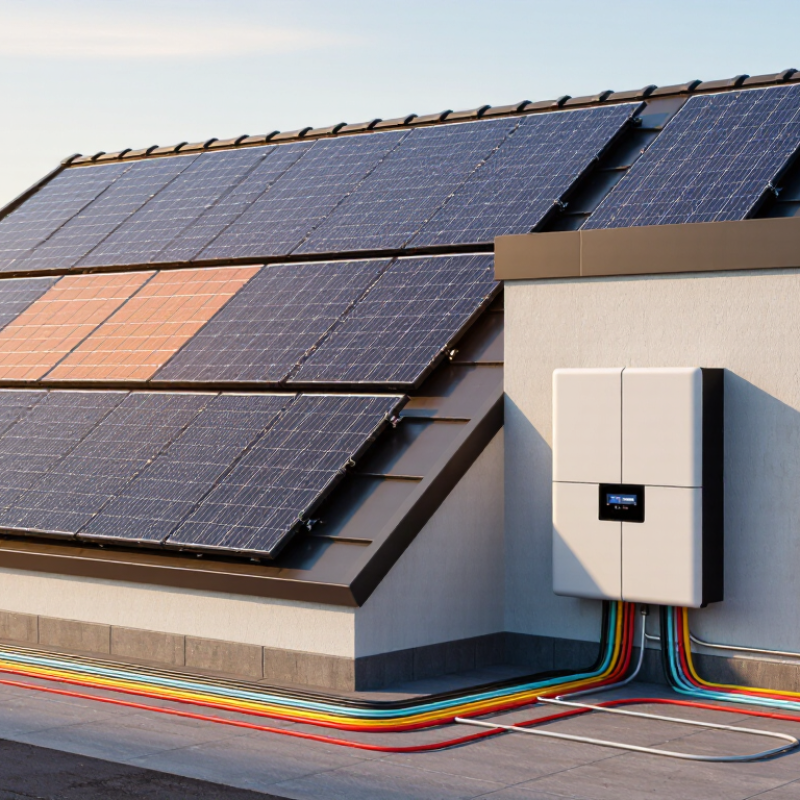
Top 10 Can I Mix Solar Panel Brands on Hybrid Inverters?

Check Module Ratings at IEC 60904-3 STC: 1,000 W/m², 25°C, AM1.5

A hybrid inverter can accept modules from different manufacturers, but the label alone does not show whether they work well together. Compare their nameplate ratings under Standard Test Conditions: 1,000 W/m² irradiance, 25°C cell temperature, and the AM1.5 reference spectrum. These conditions support a fair comparison. Not a field guarantee.

Check open-circuit voltage (Voc), maximum-power voltage (Vmp), short-circuit current (Isc), and maximum-power current (Imp). Confirm that cold-weather Voc stays below the inverter’s DC limit, and that operating voltage fits the MPPT range. In a series string, current mismatch can reduce output; parallel strings also need careful current checks. Similar ratings help, but the inverter’s manual sets the actual boundaries.

If two module types have different Vmp values, placing them on separate MPPT inputs may avoid forcing them to operate at one shared voltage. Check the input-current limit for each tracker, too. A spreadsheet can miss wiring layout or shade from a nearby vent. That deserves a site check. STC numbers are useful starting points, though real modules heat up, clouds move, and production shifts through the day. I would document the ratings and inverter limits before combining modules, then verify the final string design with a qualified installer.

Compare Voc, Vmp, Isc, and Imp with Hybrid-Inverter MPPT Limits

Top 10 Can I Mix Solar Panel Brands on Hybrid Inverters?

Different panel brands can work on one hybrid inverter, but electrical matching matters more than the label. Compare each module’s Voc, Vmp, Isc, and Imp with the inverter’s datasheet limits. Voc rises in cold weather, so calculate the corrected string voltage for the site’s lowest expected temperature. It must remain below the inverter’s maximum DC voltage. Vmp must sit inside the MPPT operating range during normal operation. Check both ends of that range, not just the nominal voltage.

Isc matters when checking the inverter’s maximum input current, especially when strings run in parallel. Imp helps show whether modules in a series string will operate at compatible currents; the lower-current module can constrain the string. Keep differently oriented arrays on separate MPPT inputs where possible.

The 2013 NREL review by Jordan and Kurtz analyzed roughly 2,000 photovoltaic degradation rates and reported a median near 0.5% per year. That figure is not a mixing allowance. It is a reminder that older modules may no longer match their original datasheet values. IEC 62548-1 provides design requirements for PV arrays, but actual limits remain inverter-specific. Recheck calculations against current module data and local minimum temperatures.

Real installations are messier than a spreadsheet. A little uncertainty remains.

Assess Series-String Mismatch: Lower-Current Modules Can Limit String Output

Mixing panel brands on a hybrid inverter can work, but series strings need careful electrical matching. In a series string, every module carries the same current. A lower-current module can therefore pull the string away from its best operating point and reduce output.

A quiet trap.

For example, a shaded or lower-current panel may constrain otherwise well-lit modules, even when their nameplates show higher power. Different voltage curves can also make the inverter’s maximum power point tracker settle on a compromise.

NREL’s PVWatts documentation assigns a 2% default mismatch-loss allowance within its standard system-loss model. Treat that as a modeling assumption, not a guaranteed penalty or a measured result for every mixed-brand string. Actual losses depend on module behavior, shading, temperature, and how the array is wired.

Before combining panels, compare Imp and Vmp, then check cold-weather Voc against the inverter’s voltage limit. Keep modules with different current characteristics on separate MPPT inputs when possible.

This is practical guidance, not a substitute for checking the inverter and module datasheets. Even careful matching can miss real-world differences; that part deserves a second look.

Size Parallel-String Current Using NEC 690.8’s 125% Isc Factor

Top 10 Can I Mix Solar Panel Brands on Hybrid Inverters?

Different panel brands may work on one hybrid inverter, but brand names alone do not determine compatibility. Compare each module’s open-circuit voltage, operating voltage, and short-circuit current with the inverter’s limits. Keep mismatched arrays on separate MPPT inputs when possible. A shared MPPT can force panels with different electrical behavior to operate at a less useful point. Small differences matter. Check the inverter and module documentation, and confirm the rules for your local code edition.

For parallel strings, add the short-circuit current of each string, then apply NEC 690.8’s 125% factor. For example, two strings rated at 11.4 A each total 22.8 A; multiplied by 1.25, that is 28.5 A. Use the resulting value when evaluating circuit ampacity and inverter input limits. Don’t stop there: conductor and overcurrent-device sizing may involve additional NEC requirements, temperature corrections, and equipment instructions. I have seen a neat-looking array plan miss this step.

Tips: Write down each string’s Isc before combining values. Verify voltage limits, fusing needs, and MPPT compatibility against equipment labels and manuals. When panel specifications differ, get a qualified designer to review the calculations.

Top 10: Can You Mix Solar Panel Brands on Hybrid Inverters?

Parallel-string current examples using NEC 690.8’s 125% Isc factor

For each example, the summed short-circuit current (Isc) is the total Isc of the parallel strings; the NEC 690.8 calculation shown is that sum multiplied by 1.25. These examples illustrate the calculation, not panel-brand compatibility. Mixing modules requires checking their electrical characteristics, string design, hybrid inverter MPPT limits, and applicable code requirements. Confirm final conductor and overcurrent-device sizing against the locally adopted code.

Verify Array Design, Connectors, and Warranties Against IEC 62548 and Manufacturer Rules

Top 10 Can I Mix Solar Panel Brands on Hybrid Inverters?

Mixing panel brands can work, but the array must be designed around electrical behavior, not appearance. In each series string, compare operating current and voltage; a weaker current can limit the string. Check cold-weather open-circuit voltage against the inverter’s maximum DC input. Also verify string limits, parallel inputs, and temperature-corrected values. Small details matter.

IEC 62548 provides design guidance for PV-array wiring, protection, switching, and earthing. It does not replace the inverter and module installation instructions. Connector types that look alike may not be approved for mating, so confirm compatibility in writing. Warranty terms may also exclude mixed configurations or damage from incorrect connections. NREL’s Compendium of Photovoltaic Degradation Rates reviewed more than 2,000 rates and reported a median degradation rate near 0.5% per year. That figure is not a prediction for a mixed-brand array, but it shows why long-term performance records matter.

Tips: Keep panels with different current ratings on separate MPPT inputs when possible. Before installation, document each module’s Voc, Vmp, Isc, and Imp, then check the inverter’s limits and the applicable IEC 62548 edition. Photograph labels and retain written warranty confirmations. I would still ask a qualified designer to review the final string map; datasheets can hide small but important differences.

Top 10: Can I Mix Solar Panel Brands on Hybrid Inverters? Verify Array Design, Connectors, and Warranties Against IEC 62548 and Manufacturer Rules

# Design check Why it matters What to verify before installation Relevant standard or rule
1 Compatibility with the same string Modules connected in series share the same current. Differences in operating characteristics can reduce string output and may cause operating limits to be exceeded. Compare module datasheets, especially maximum-power current, voltage, temperature coefficients, and permitted operating conditions. Have the array designer confirm the proposed string configuration. Design and protection requirements in the applicable edition of IEC 62548, plus module and inverter manufacturer instructions.
2 Parallel strings and voltage matching Parallel strings connected to the same input should operate at compatible voltages. Significant differences can lead to poor performance or an unsuitable operating point. Check each string’s module count and voltage characteristics, including expected voltage at site temperatures. Do not parallel unlike strings unless the inverter documentation and design calculations allow it. IEC 62548 array-design provisions and the inverter’s input specifications.
3 MPPT input arrangement Maximum power point trackers control the operating point of their connected array. Combining dissimilar strings on one tracker can prevent one or both strings from operating optimally. Confirm the number of independent MPPTs and which physical inputs share a tracker. Use separate trackers for dissimilar arrays when supported and required by the design. Inverter manufacturer’s wiring diagram, MPPT limits, and installation instructions.
4 Maximum DC voltage in cold conditions Module open-circuit voltage rises as cell temperature falls. A string that appears acceptable at standard test conditions may exceed the inverter’s maximum DC voltage in cold weather. Calculate worst-case string open-circuit voltage using the module temperature coefficient and the design minimum temperature. Keep it within the inverter and system voltage ratings. IEC 62548 design calculations and inverter maximum DC voltage limits.
5 Current limits and protection String and array currents must remain within the ratings of the inverter inputs, cables, connectors, and protective devices. Parallel strings can increase current. Check maximum input current, short-circuit current limits, cable ampacity, and whether string overcurrent protection is required for the proposed arrangement. IEC 62548 array wiring and protection requirements, applicable local electrical rules, and equipment ratings.
6 Connector compatibility Connectors that look alike are not necessarily compatible. Mating unapproved connector types can create unreliable contacts, overheating, or water ingress. Use connectors of the same approved type and manufacturer pairing specified for the equipment, or use a specifically approved transition method. Never rely on appearance alone. Connector manufacturer instructions, inverter and module instructions, and applicable installation rules.
7 Module orientation and shading Different module layouts, orientations, or shading conditions can produce different current and voltage behavior, particularly when modules share a string or tracker. Review roof orientation, tilt, shading, and module electrical characteristics. Group modules with similar conditions where practical and confirm the design using the inverter’s permitted configuration. IEC 62548 array-design principles and inverter MPPT operating requirements.
8 Hybrid inverter operating limits A hybrid inverter must satisfy both its PV input limits and any operating requirements associated with its battery or backup functions. A compatible battery does not make an unsuitable PV array compatible. Check the current inverter documentation for permitted module configurations, input voltage and current ranges, MPPT range, and any restrictions on parallel inputs. Current inverter installation instructions and product specifications.
9 Warranty and approved-system conditions Combining products may affect warranty coverage if installation, connector pairing, electrical limits, or approved-system conditions are not followed. Coverage depends on the specific written terms. Review the module, inverter, connector, and workmanship warranty terms. Obtain written clarification from the relevant suppliers if the proposed combination is not expressly addressed. Applicable product warranty documents and manufacturer installation requirements.
10 Documentation, inspection, and commissioning Clear design records help installers and inspectors verify that the mixed array is correctly configured and stays within equipment ratings. Record module types and datasheets, string layout, voltage and current calculations, connector details, protection selections, and commissioning test results. Have the completed system checked by a qualified professional. IEC 62548, applicable local regulations, and project inspection and commissioning requirements.

FAQS

Can I mix solar panels from different manufacturers on one hybrid inverter?

Often, yes. Compare electrical ratings, not labels or appearance. The inverter manual sets the actual limits.

Which panel ratings should I compare?

Check Voc, Vmp, Isc, and Imp on each module’s data sheet. Use STC ratings as a starting point, not a field guarantee.

What happens if panels have different operating voltages?

A shared MPPT input may make them operate at a less useful point. Separate MPPT inputs can help. Check each input’s voltage and current limits.

Can I put different panels in one series string?

It may work, but mismatched current can reduce string output. Compare operating current and voltage before combining them. Small differences matter.

How do I check cold-weather voltage?

Confirm that the array’s cold-weather Voc stays below the inverter’s maximum DC voltage. Temperature-corrected values matter. Don’t rely on STC alone.

How should I calculate current for parallel strings?

Add each string’s Isc, then apply the 125% factor described in NEC 690.8. For two 11.4 A strings, the result is 28.5 A.

Are matching connector shapes enough to confirm compatibility?

No. Similar-looking connectors may not be approved for mating. Confirm compatibility in writing and follow equipment instructions.

Could mixing panels affect warranties or long-term output?

Warranty terms may exclude some mixed configurations or damage from incorrect connections. A reported median degradation rate near 0.5% per year is not a prediction for your array.

What should I document before installation?

Record each module’s ratings, inverter limits, string layout, and written warranty confirmations. Photograph the labels. I might miss a detail on a spreadsheet, so have a qualified designer review the final plan.

Conclusion

Mixing solar panel brands on a hybrid inverter can work, but compatibility depends on electrical specifications rather than brand labels. Compare each module’s ratings under IEC 60904-3 standard test conditions—1,000 W/m² irradiance, 25°C cell temperature, and AM1.5 spectrum. Check open-circuit voltage (Voc), operating voltage (Vmp), short-circuit current (Isc), and operating current (Imp) against the inverter’s MPPT voltage and current limits, including expected temperature-related voltage changes.

In a series string, modules with lower current capability can restrict the output of the entire string, so combining mismatched panels may reduce performance. For parallel strings, calculate total current and apply the NEC 690.8 125% Isc sizing factor when checking equipment limits. Before installation, confirm the proposed array layout, connectors, and warranty conditions align with IEC 62548 guidance and the relevant manufacturers’ requirements. If you are asking, “can I mix different brands of solar panels on one hybrid inverter,” the practical answer is yes only when the full array design is electrically compatible and properly verified.

Oliver

Oliver

Oliver is a seasoned marketing professional with a wealth of expertise in driving brand awareness and engagement. With a deep understanding of our company's product offerings, he consistently delivers high-quality content that enriches our professional blog. His insights not only shed light on......