When buyers compare a China top hybrid inverter, lifespan is often the first practical question. A reliable unit must manage solar input, battery charging, backup loads, and grid changes every day. This raises a common search question: what is the average lifespan of a modern off grid hybrid inverter? In general, quality hybrid inverters may operate for 10 to 15 years under suitable conditions. Some units last longer, but real performance depends on design, installation, and maintenance. A long warranty helps. It is not absolute proof.
Field experience shows that heat, dust, unstable voltage, and frequent overloads can shorten service life. For example, an inverter installed in a sealed outdoor cabinet may reach high internal temperatures by afternoon. Its cooling fans and capacitors may then age faster. Battery cycling also matters. A home using backup power every evening places greater stress on switching components than a home using occasional emergency backup. Small details matter.
Look beyond marketing claims. Check independent test reports, certification records, warranty terms, replacement-part access, and technical support. Reputable Chinese manufacturers usually publish efficiency curves, protection features, operating temperatures, and recommended installation clearances. These details offer stronger evidence than a simple “top quality” statement. Still, published data may not reflect every climate or load profile. That is worth questioning. This guide examines expected service life, common failure points, maintenance practices, and purchasing factors. It aims to support a careful decision, not promise an unrealistically permanent system.
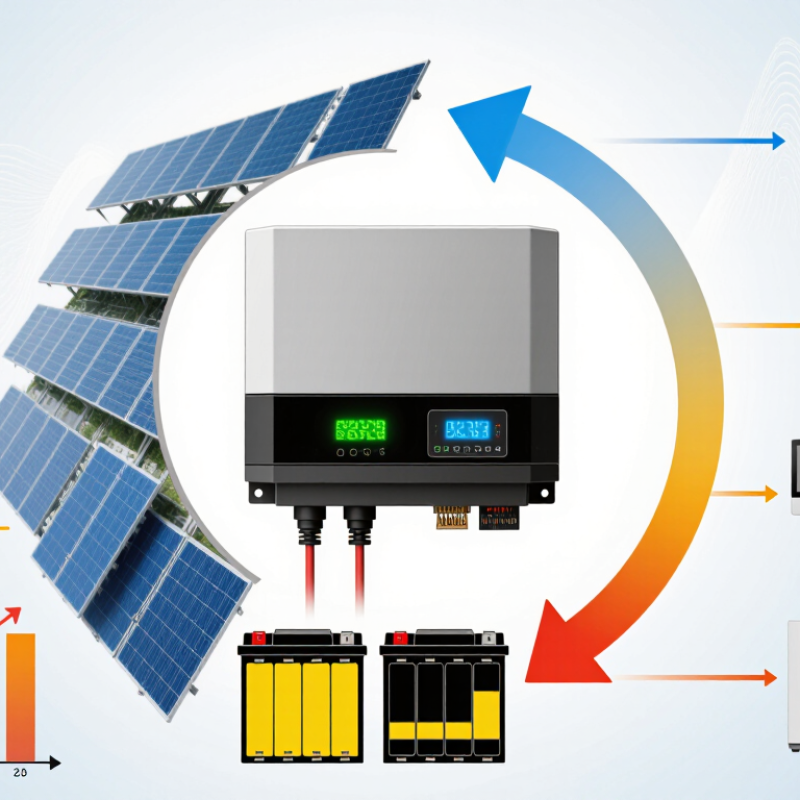
A hybrid inverter combines solar conversion, battery control, and grid management in one system. Solar panels produce direct current, or DC, while household appliances use alternating current, or AC. The inverter changes DC into usable AC for lights, refrigerators, and other loads. It can also send extra solar energy to a battery instead of wasting it. Simple in theory.
During daylight, the inverter tracks panel output and supplies household demand. Surplus energy charges the battery. When clouds pass or evening arrives, stored energy returns through the inverter. If the battery becomes low, the system can draw power from the utility grid. During an outage, a properly installed backup circuit may continue operating selected appliances. It will not usually power every load in the house.
A hybrid inverter’s typical service life is about 10 to 15 years, depending on design and operating conditions. High temperatures, dust, moisture, unstable voltage, and frequent overloads can shorten that period. In my experience, ventilation matters more than many owners expect. A shaded wall with clear airflow is safer than a hot, enclosed cabinet. Regular monitoring can reveal rising temperatures or unusual fault codes early. Still, real installations are less tidy. Poor cable routing or incorrect settings may create problems even with quality equipment. Qualified installers should verify protection devices, grounding, battery compatibility, and local electrical requirements.
A China-made hybrid inverter typically lasts 10 to 15 years in a residential solar system. Higher-quality units may operate longer under moderate conditions. However, country of manufacture alone does not determine service life. Component quality, factory testing, installation, and daily workload matter more. Field inspections often find that inverters fail earlier when installed in hot, dusty rooms with poor airflow.
A practical installation should keep the inverter away from direct sunlight and standing moisture. Its cooling fans and vents need regular cleaning, especially near farms, roads, or workshops. Stable grid voltage also reduces stress on capacitors and switching components. Many systems operate for over a decade, but a heavily used inverter may show faults sooner. Battery charging and discharging can increase thermal cycling.
Look beyond the advertised lifespan. Check the warranty period, replacement process, protection ratings, monitoring records, and local technical support. A longer warranty can indicate manufacturer confidence, but it is not a guarantee of trouble-free operation. In my experience, small warning signs often appear first: unusual fan noise, repeated communication errors, or rising internal temperatures. Ignoring them can turn a minor repair into a full replacement.
The battery usually has a different lifespan. Its replacement may occur before the inverter needs major service. Owners should keep installation records and review performance data each month. Some assumptions deserve reconsideration. An inexpensive inverter is not always unreliable, yet the lowest purchase price rarely reflects long-term maintenance costs.
A hybrid inverter often operates for 10 to 15 years, but its actual lifespan depends on daily conditions. In residential installations, heat is one of the most damaging factors. An inverter mounted inside a hot, poorly ventilated cabinet may age faster than one installed in a shaded, dry location. Dust also blocks airflow and raises internal temperature. Small details matter.
Battery usage has an equally strong effect. Deep discharges, frequent high-power charging, and sudden load changes increase electrical stress. A correctly matched battery reduces this pressure. Oversized solar arrays can also create unnecessary thermal strain if the inverter regularly works near its maximum rating. Occasional peak operation is normal. Constant peak operation is not.
Installation quality shapes long-term reliability. Loose terminals, undersized cables, moisture exposure, and unstable grid voltage can cause repeated faults. Professional commissioning should include cable checks, protective devices, grounding, and software configuration. Routine inspections help identify unusual noise, heat, error codes, or declining efficiency before a major failure occurs.
Maintenance is often overlooked. It should not be.
Still, lifespan estimates are not promises. A well-maintained unit may exceed its expected service period, while a neglected unit may fail much earlier. Some assumptions remain uncertain, especially where climate, battery chemistry, and household demand change over time. Recording operating temperature, energy throughput, and fault history gives owners stronger evidence when evaluating performance.
A quality hybrid inverter often lasts 10 to 15 years, but harsh conditions can shorten that period. Heat, dust, humidity, unstable voltage, and frequent overloads place continuous stress on internal components. Extending service life starts with installation. Mount the inverter in a shaded, dry, and well-ventilated location. Keep clear space around its vents, and avoid enclosed cabinets that trap hot air. Temperature matters more than many owners expect.
Regular inspection also prevents small faults from becoming expensive failures. Check cables for looseness, discoloration, or cracked insulation. Clean external air inlets with a soft brush, but never spray water into the unit. Review warning codes and unusual sounds promptly. A qualified electrician should test connections and protective devices during scheduled maintenance. In practice, maintenance schedules are rarely perfect. Still, a simple inspection every three to six months can reveal problems early.
Tips: Keep battery settings within the manufacturer’s recommended range. Avoid repeated deep discharges when possible. Protect the inverter from rodents, dripping pipes, and direct sunlight. Record operating temperatures and fault messages. This simple log helps technicians identify patterns. Do not ignore a minor alarm. It may be minor, or it may be the first sign of overheating.verter service life.
A quality hybrid inverter commonly lasts 10 to 15 years, but actual service life varies widely. Heat, dust, humidity, voltage fluctuations, and daily battery cycling can shorten that estimate. An inverter in a shaded, ventilated utility room may perform well longer than one installed beside a hot roof. Age alone is not a repair decision.
Repair is usually sensible when the inverter shows a clear, isolated fault. Examples include cooling-fan noise, loose terminals, sensor errors, or occasional shutdowns. A qualified technician should inspect error logs, cable connections, ventilation, and internal temperatures. Do not open the enclosure yourself. Stored electrical energy can remain dangerous after shutdown. My experience is that many “inverter failures” actually begin with poor airflow or aging batteries, so replacing the inverter too quickly can waste money.
Tips: Keep the area dry and dust-free. Record error codes and shutdown times. Check performance during hot afternoons. Replace the unit when failures repeat, essential parts are unavailable, or repair costs approach half the price of a new system. Severe insulation damage, burnt terminals, or unstable output also justify replacement. A simple age rule is imperfect. A 12-year-old inverter may still be reliable, while a five-year-old unit may need urgent attention. Have an accredited electrician compare efficiency, safety test results, repair history, and future parts availability before deciding.
| Assessment Area | Typical Real-World Range | What It Means | Recommended Action |
|---|---|---|---|
| Average service life | 10–15 years | Most residential hybrid inverters operate within this range when correctly installed, ventilated, and maintained. | Normal operation |
| Well-maintained service life | 15–20 years | Longer service is possible in clean, dry, shaded locations with stable temperatures and regular inspections. | Continue monitoring |
| Typical warranty period | 5–10 years | Warranty terms vary by model, region, installation conditions, and registration requirements. The battery warranty is usually separate. | Check documents |
| High-temperature exposure | Above approximately 40°C ambient temperature | Frequent heat exposure can accelerate aging of capacitors, fans, relays, and other electronic components. | Improve ventilation |
| Dust, moisture, or salt exposure | Site-dependent risk | Blocked airflow, condensation, and corrosive coastal air can reduce cooling performance and increase electrical faults. | Inspect and clean |
| Minor communication fault | Intermittent monitoring, Wi-Fi, or meter connection | The power conversion section may still be healthy while the communication connection, configuration, or network is faulty. | Troubleshoot first |
| Cooling fan noise or failure | Usually repairable if detected early | A noisy or seized fan can cause overheating and protective shutdowns. Fan replacement should be performed by a qualified technician. | Repair promptly |
| Repeated over-temperature shutdowns | Recurring after cleaning and ventilation checks | Persistent thermal alarms may indicate a failed fan, blocked heat sink, damaged sensor, or aging internal components. | Arrange diagnosis |
| Insulation or ground-fault alarm | Any recurring or persistent alarm | The fault may originate in PV wiring, connectors, the array, moisture ingress, or the inverter. Do not bypass the protection. | Stop and inspect safely |
| Battery communication or charging fault | Often configuration- or wiring-related | Incorrect battery settings, incompatible firmware, loose communication cables, or a battery protection event can imitate inverter failure. | Verify compatibility |
| Repeated hardware fault after repair | More than one major failure or recurring shutdown | Repeated failures can indicate broader component aging, poor environmental conditions, or a repair that is no longer economical. | Compare replacement costs |
| Repair cost near replacement cost | Common decision point: approximately 50–70% of a new installed unit | When repair approaches the cost of a new inverter, replacement may provide better reliability and a new warranty. | Evaluate replacement |
| Inverter older than 12–15 years | Age-related risk increases | Even if the unit still operates, spare parts, firmware support, and repair availability may become limited. | Plan proactively |
| Severe internal damage | Burn marks, melted terminals, water ingress, or damaged circuit boards | Major internal damage can create safety risks and may not be economically or reliably repairable. | Replace after inspection |
| Safe replacement trigger | Frequent shutdowns, persistent critical alarms, or no available parts | Replacement is generally preferable when safety, reliability, compatibility, or long-term support cannot be assured. | Use a qualified installer |
A hybrid inverter manages solar power, battery storage, and grid electricity. It changes solar DC electricity into AC electricity for household appliances. It can send surplus energy into a battery. Simple in theory.
Solar panels supply electricity to household appliances during daylight. Extra power charges the battery instead of being wasted. Cloud cover can reduce panel output. The system may then use stored energy or grid electricity.
It can power selected appliances through a properly installed backup circuit. It will not usually operate every household load. Refrigerators, lights, or communication equipment may receive priority. Large heating or cooling equipment may exceed the available capacity.
Choose a shaded, dry, and well-ventilated location. Leave clear space around the air vents. Avoid hot enclosed cabinets and direct sunlight. A cooler wall is safer.
Many hybrid inverters operate for about 10 to 15 years. Heat, dust, moisture, unstable voltage, and overloads can shorten service life. A five-year-old unit may need attention. A twelve-year-old unit may still work reliably.
Inspect the system every three to six months. Check cables for looseness, discoloration, or cracked insulation. Clean external air inlets with a soft brush. Never spray water into the inverter.
Record unusual sounds, fault codes, temperatures, and shutdown times. Repeated alarms deserve prompt inspection. A minor alarm may signal overheating. It might be minor.
Repair may suit an isolated fault, such as fan noise or a sensor error. Replacement becomes more reasonable when failures repeat or essential parts are unavailable. Burnt terminals, severe insulation damage, or unstable output are serious signs. A qualified electrician should compare safety results, repair costs, efficiency, and future parts availability. My judgment could still be wrong without an on-site inspection.
A hybrid inverter combines solar power generation, battery storage, and grid or backup supply management in one system. It converts the electricity produced by solar panels into usable power, directs surplus energy to batteries, and automatically switches between available power sources when needed. For many China-made hybrid inverters, the typical service life is around 8 to 15 years, although actual performance depends on component quality, installation standards, operating conditions, and maintenance. This also helps answer the question: what is the average lifespan of a modern off grid hybrid inverter? In many cases, it can serve reliably for about a decade or longer.
High temperatures, humidity, dust, voltage fluctuations, excessive loads, and poor ventilation can shorten its lifespan. To extend service life, users should install the inverter in a clean, dry, shaded, and well-ventilated location, maintain suitable battery settings, avoid overloading, and arrange regular inspections. Repair may be appropriate for minor faults, but replacement is usually more practical when efficiency drops significantly, failures become frequent, or essential components are no longer economical to service.

Yde Power